🛠️
Basic Use
-
✓
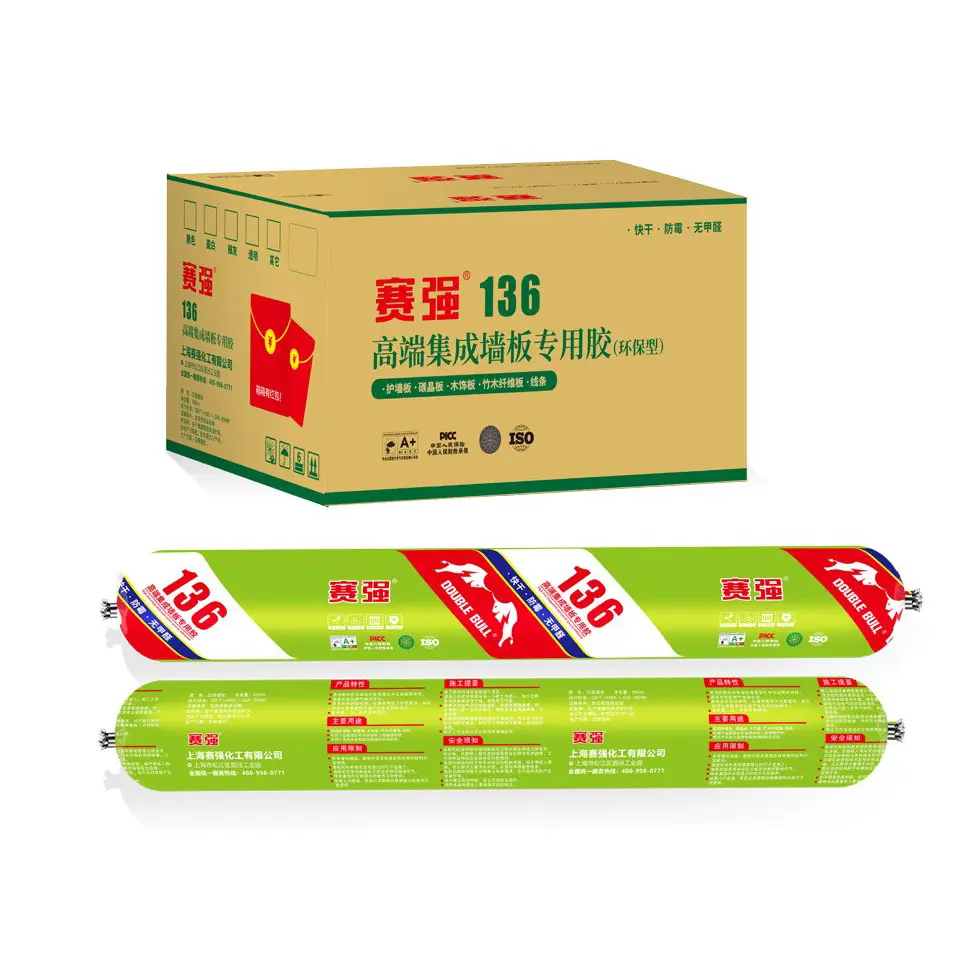
Suitable for wall panels, carbon crystal panels, wood decorative panels, bamboo wood fiberboard, and lines.
-
✓
Can be used for metal joints and metal structural engineering joint sealing.
-
✓
Can be used for adhesive sealing of most other building joints.
📋
Parameter Specifications
⚠️ Important Usage Restrictions
- ●All materials that exude oil, plasticizers, and other liquid organic substances are not suitable.
- ●When applying glue, the surface temperature of the material should not exceed 50℃ for construction.
- ●After application, the adhesive has not yet solidified and cannot be completely sealed and isolated from the air.
- ●It is not suitable to use in places that are damp all year round and submerged in water for a long time.
- ●Ground pedestrian walkways should not be used in areas that are subjected to excessive friction and physical damage.
📦
Storage
🌡️
Store in its original packaging in a dry and ventilated environment at a temperature of 27℃ or lower.
🧪
Technical Data on Material Properties
- 🔸Maintains good viscosity under environmental conditions of -25℃ to 50℃, making it easy to extrude.
- 🔸Maintains good elasticity at -50℃ to 150℃ after curing.
- 🔸Not affected by sunlight UV, rainwater, ice and snow, air pollution, or ozone.
- 🔸Maintains excellent weather resistance, waterproof and sealing performance after several years.
- 🔸Compatible with reflective glass, laminated glass, silicone insulated glass, acrylic acid, and polyethylene.
🏗️
Application Scenarios
- ✔Fixed bonding, filling, and insulation of various doors, windows, and cabinets.
- ✔Sealing, insulation, and heat preservation of various pipelines.
- ✔Wall, roof, and enclosure panels.
Frequently Asked Questions
Q: What surfaces is this adhesive suitable for?
This adhesive is suitable for wall panels, carbon crystal panels, wood decorative panels, bamboo wood fiberboard, lines, metal joints, and most other building joints. It is not suitable for surfaces that exude oil or plasticizers.
Q: What temperature range can this adhesive withstand after curing?
After curing, the adhesive maintains excellent elasticity across a wide temperature range of -50℃ to 150℃, ensuring reliability in extreme environments.
Q: Can this adhesive be used in submerged environments?
No. This adhesive is not suitable for places submerged in water for long periods or areas that remain damp all year round.
Q: What is the maximum surface temperature allowed during application?
During construction, the surface temperature of the material should not exceed 50℃ to ensure proper adhesion and performance.
Q: How should this adhesive be stored?
Store the product in its original packaging in a dry, ventilated environment at a temperature of 27℃ or lower to maintain its quality.
Q: Is it compatible with glass and synthetic materials?
Yes, it is highly compatible with reflective glass, laminated glass, silicone insulated glass, acrylic acid, and polyethylene materials.
 Saiqiang