Choosing the best Polyurethane Foam in 2026 requires more than comparing prices or catalog photographs. Global buyers need materials that match their application, climate, manufacturing process, and supply expectations. A foam used inside a sofa behaves differently from one supporting medical equipment, vehicle seating, insulation, or protective packaging. Small details matter. Density, firmness, resilience, cell structure, moisture resistance, and recovery time can change product performance significantly.
A reliable evaluation begins with technical documents and physical samples. Ask suppliers for density results, compression testing, dimensional stability data, and applicable safety information. Then inspect a sample in realistic conditions. Press it repeatedly. Check its recovery after storage. Observe its surface after exposure to heat, humidity, or cleaning agents. Laboratory results are valuable, but they do not always predict factory handling or long-distance shipping. That gap deserves attention.
Global purchasing also involves consistency. Confirm production capacity, batch controls, packaging methods, lead times, and inspection procedures before placing a large order. Clear communication about tolerances can prevent costly misunderstandings. Certifications may support confidence, but buyers should verify their scope, issuing body, and validity. A certificate alone is not proof of suitability.
There is no universal best foam.
The strongest choice depends on evidence, not marketing language. This guide examines practical selection criteria, supplier reliability, application performance, and responsible purchasing considerations for international buyers. Some recommendations may require refinement as technologies, standards, and market conditions change. That is normal. Careful buyers keep reviewing the evidence.
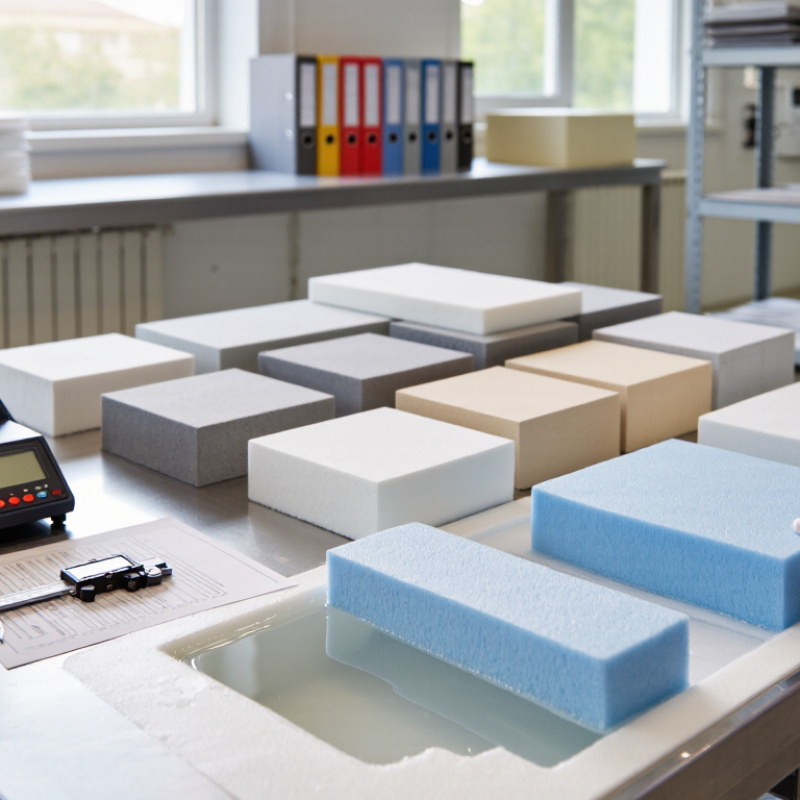
For global buyers in 2026, polyurethane foam selection starts with density, but density is not performance by itself. Flexible foam usually has lower density and an open-cell structure, making it suitable for cushions, mattresses, acoustic panels, and protective packaging. It compresses easily. A softer grade can feel comfortable, yet it may lose support under repeated loading. Buyers should compare density with firmness, resilience, tensile strength, and compression set, using current technical data rather than a catalog phrase.
Rigid foam generally offers higher insulation value, dimensional stability, and load-bearing capacity. Its closed cells help slow heat transfer and moisture movement in walls, cold-chain containers, doors, and equipment housings. However, higher density does not automatically mean better insulation. Check the datasheet. Confirm thermal conductivity, water absorption, fire behavior, and service temperature through recognized test methods. Local building requirements still matter, especially when foam is installed inside occupied structures.
Spray foam is commonly supplied in open-cell and closed-cell forms, with density influencing expansion, rigidity, insulation, and moisture control. Open-cell material feels lighter and expands more; closed-cell material is denser and more resistant to water vapor. Application quality remains critical. Poor substrate preparation, uneven mixing, or incorrect temperature can create weak spots. I have seen buyers focus too heavily on price and overlook installer training. That was an avoidable mistake. Ask for batch traceability, test reports, and a sample trial before approving a large shipment. Do not guess.
| Foam class | Typical density (kg/m³) |
Cell structure | Typical thermal conductivity (W/m·K) |
Key characteristics | Common applications | Buyer considerations |
|---|---|---|---|---|---|---|
| Flexible polyurethane foam (low density) |
18–30 | Predominantly open-cell | Approximately 0.035–0.045 | Soft, resilient, compressible, and air-permeable; generally not intended as a moisture barrier. | Furniture cushions, mattresses, packaging inserts, acoustic components, and automotive seating. | Confirm firmness, compression-set performance, flammability requirements, and recovery after repeated loading. |
| Flexible polyurethane foam (medium density) |
30–60 | Predominantly open-cell | Approximately 0.035–0.045 | Balanced resilience, support, cushioning, and durability with a wide range of firmness levels. | Higher-performance seating, upholstery, medical cushions, sound absorption, and protective packaging. | Request firmness and support data using agreed test methods; density alone does not define comfort or durability. |
| Flexible polyurethane foam (high density) |
60–120 | Open-cell or partially reticulated | Approximately 0.035–0.050 | Higher load-bearing capacity, improved fatigue resistance, and greater material mass than lower-density grades. | Industrial seals, heavy-duty seating, filtration media, vibration control, and specialty cushioning. | Evaluate permeability, tensile strength, tear strength, hydrolysis resistance, and long-term compression set. |
| Rigid polyurethane foam (insulation board or block) |
28–45 | Predominantly closed-cell | Approximately 0.022–0.030 | High thermal resistance, low water absorption relative to open-cell foam, and good dimensional stability when properly manufactured. | Building insulation, refrigerated transport, cold rooms, insulated panels, doors, and pipe systems. | Check aged thermal resistance, facer compatibility, dimensional stability, fire classification, and moisture exposure limits. |
| Rigid polyurethane foam (high-density structural) |
45–160 | Closed-cell | Approximately 0.025–0.040 | Higher compressive strength and improved resistance to impact, load, and mechanical handling. | Composite panels, buoyancy components, tooling patterns, structural cores, and industrial insulation. | Select density according to compressive load and processing needs; verify bonding strength and thermal aging performance. |
| Spray polyurethane foam (open-cell) |
8–20 | Open-cell | Approximately 0.035–0.045 | Lightweight, expansive, and useful for filling irregular cavities; provides air sealing but usually requires a separate vapor-control strategy. | Roof assemblies, wall cavities, attics, rim joists, and sound-damping applications. | Control substrate moisture, installation temperature, lift thickness, ventilation, and required thermal or vapor barriers. |
| Spray polyurethane foam (closed-cell) |
30–60 | Closed-cell | Approximately 0.020–0.030 | Higher R-value per unit thickness, strong air sealing, low water absorption, and increased rigidity compared with open-cell spray foam. | Exterior walls, roofs, foundations, cold-storage areas, tanks, and difficult-to-insulate geometries. | Verify expansion pressure, adhesion, dimensional stability, fire protection, installer qualification, and substrate compatibility. |
Density affects cost, weight, and feel, but it does not define total performance. Compare firmness, resilience, strength, compression set, and aging results. A denser sample may still recover poorly. Do not guess.
Flexible foam around 15–25 kg/m³ suits light cushions and economical products. Bedding and general comfort items often use 25–35 kg/m³ foam. Heavy-duty seating may require 40–60 kg/m³, depending on load and service life. These ranges are useful starting points, not final answers.
Request batch-specific results for density, firmness, tensile strength, elongation, tear strength, and compression set. Fatigue and recovery testing also matter for daily-use cushions. Test conditions can change the result. That detail is easy to overlook.
Rigid foam suits walls, cold-chain containers, doors, and equipment housings. Its closed cells can slow heat transfer and moisture movement. It may also provide dimensional stability and load-bearing support. Higher density does not automatically provide better insulation.
Check thermal conductivity, water absorption, fire behavior, and service temperature. Review results after aging, not only fresh samples. Confirm local construction requirements when foam enters occupied buildings. A catalog phrase is not evidence.
Open-cell spray foam is lighter and expands more during application. Closed-cell foam is denser and generally resists water vapor more effectively. The correct choice depends on insulation, moisture, rigidity, and installation conditions. Neither type fixes poor workmanship.
Poor surface preparation can create weak bonding areas. Uneven mixing may produce inconsistent density and insulation. Incorrect temperature can affect expansion and curing. Small defects can hide beneath a smooth surface.
Compare reported GWP, thermal performance, dimensional stability, closed-cell content, and aging behavior. Some HFO options have reported GWP values below 1. Check ventilation, equipment controls, storage temperature, and worker training requirements. Low GWP alone is not enough.
Ask for batch traceability, safety information, test reports, formulation details, and sample-trial results. Review destination-market requirements, not only factory requirements. Repeat testing because shipment batches can vary slightly. I would not approve a large order from one sample.
Choosing the best Polyurethane Foam in 2026 requires matching the foam class, density, thermal performance, and application requirements. Flexible foam is commonly assessed within the 15–60 kg/m³ density range, with comfort, resilience, and durability evaluated through ASTM D3574 performance testing. Rigid foam is selected mainly for insulation, where thermal conductivity around 0.020–0.030 W/m·K can provide strong energy-efficiency potential when properly installed. Spray foam offers adaptable coverage for gaps, joints, and irregular surfaces, but its final performance depends on formulation, application quality, and environmental conditions.
Global buyers should also review the blowing-agent system and prioritize HFO options with a global warming potential below 1 to support 2026 compliance objectives. Before purchase, request independent or documented testing for density, compression behavior, dimensional stability, and R-value under relevant ASTM standards. Comparing technical data, safety documentation, production consistency, and local regulatory requirements will help buyers select a reliable Polyurethane Foam solution for construction, furniture, appliances, transport, and industrial applications.

 Saiqiang